Fairy Meadows Trek Gear List: Everything You Need, from Raikot Bridge to Nanga Parbat Base Camp
There are treks in Pakistan that people do once, and there is Fairy Meadows, the one people keep coming back to. A green meadow ringed with pine forest, log huts with tin roofs, and the Raikot face of Nanga Parbat, the ninth-highest mountain in the world, filling the sky right in front of you. It is the kind of view that makes you forget the jeep ride and the climb that got you there.
But Fairy Meadows is also a trek that punishes bad packing. The jeep track is dusty, the hike is steep, the weather can turn in an hour, and nights at the meadow are cold even in the middle of summer. We have seen trekkers arrive in jeans and canvas shoes with a college bag on one shoulder, and we have seen them shivering at 10pm wishing they had brought one more layer.
This guide fixes that. Instead of giving you a random list, we walk through the trek stage by stage, from Raikot Bridge to Nanga Parbat Base Camp, and show you exactly what you need at each point and why. Every item here is gear we make and test for Pakistan's mountains, so you can build your whole kit in one place.

Fairy Meadows at a glance
Before the gear, here is what you are actually signing up for.
- Where it starts: Raikot Bridge on the Karakoram Highway, between Chilas and Gilgit.
- How you get up: A jeep ride up a narrow mountain track to the road head at Tatto/Jhel, then a hike of roughly 3 to 4 hours to the meadow.
- Altitude: Fairy Meadows sits at roughly 3,300 metres. Beyal Camp is a bit higher, and Nanga Parbat Base Camp (Raikot side) is close to 4,000 metres.
- Best season: Late May to early October. June to September is the main trekking window. Outside these months, snow can close the jeep track and the trail.
- Weather: Warm sun during the day, sudden showers in the afternoon, and cold nights that can drop close to freezing, even in July.
- Stay: Wooden huts run by locals, or your own tent at the campsites.
That mix of hot days, wet afternoons and cold nights is the reason your packing matters. You need gear that handles all three without weighing you down.
Stage 1: Raikot Bridge to Tatto – the jeep ride

The trek begins before you take a single step. The jeep ride from Raikot Bridge to the road head is one of the most famous (and nerve-testing) rides in the country: a narrow track cut into the mountainside, with a long drop on one side and dust everywhere.
This is where most bags get ruined. Packs are thrown in the back of the jeep, stacked on top of each other, and covered in fine dust for an hour or more. If you get unlucky with the weather, you also get rain.
What you need here:
- A proper trekking backpack, not a duffle or a college bag. For a 2 to 3 night trip, the Dominance 45-Liter Trekking Backpack is the sweet spot: enough space for your sleeping bag, layers and food, and it carries comfortably on your back once the hike starts. If you are carrying a tent or staying longer, step up to the 60-Liter Backpack – SADPARA, named after the legendary Pakistani climber.
- A rain cover, on from the very start. A Rain Cover for Backpack is not just for rain. On the jeep it keeps dust out of your zips and pockets, and protects the fabric from scuffs. Put it on before you load the bag, not after the first shower. (Our 45L and 60L trekking backpacks are also available with a matching rain cover.)
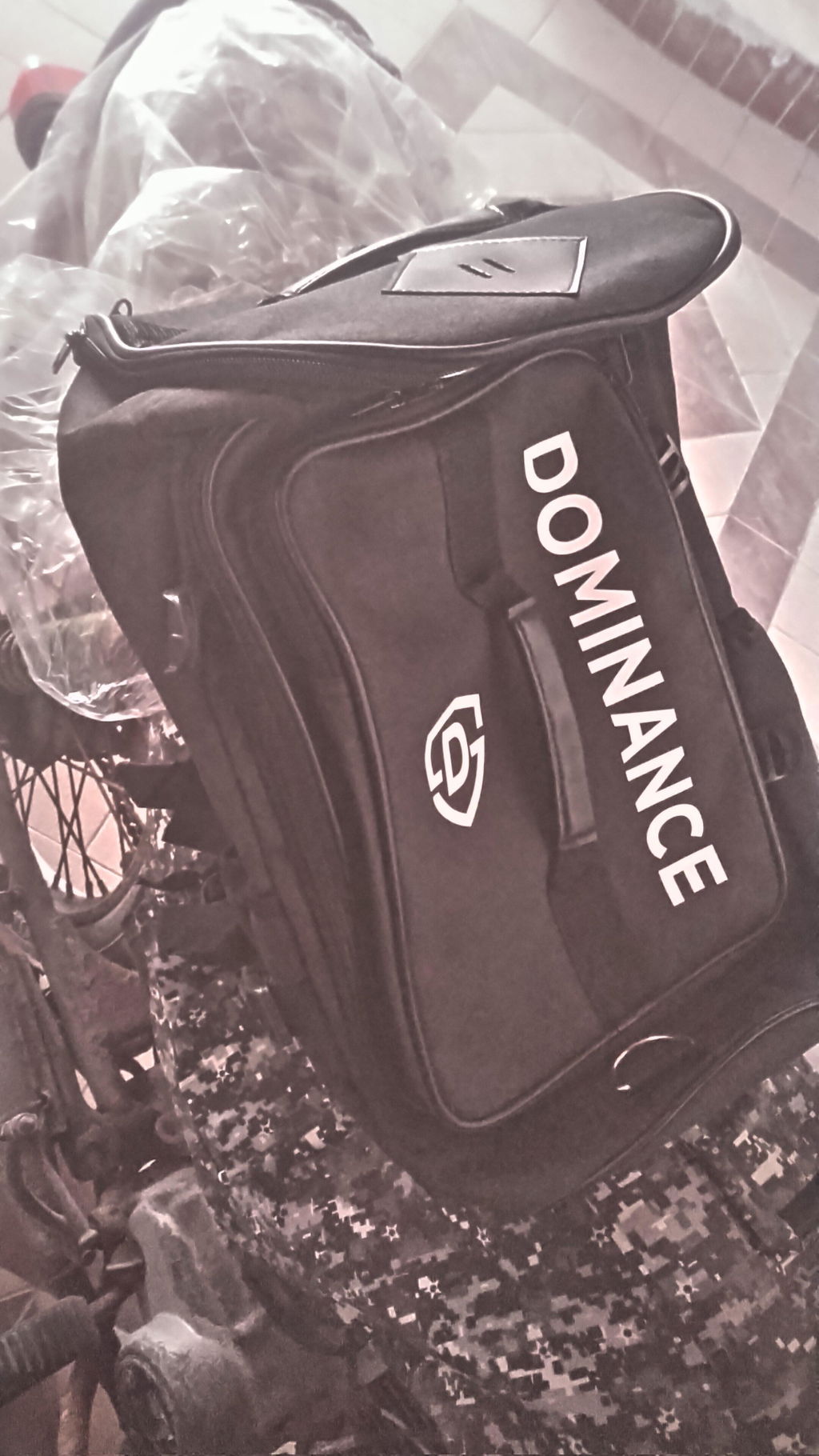
- A waist bag for the things you need in your hands. Your phone, cash for the jeep and the hut, ID card and sunglasses should not be buried in your main bag. A small Dominance Waist Bag 6L keeps them on your body, safe and easy to reach.
Tip: Keep a scarf or buff handy for the jeep ride. The dust is real, and you will want something over your nose and mouth.
Stage 2: The hike up to Fairy Meadows

From the road head, it is a steady uphill hike to the meadow, usually 3 to 4 hours depending on your fitness and how many tea stops you take. The trail is a mix of dusty switchbacks, rocky patches and forest paths. It is not technical, but it is steep in places, and the altitude starts to make itself felt.
This is where comfort becomes everything. The wrong trousers, the wrong socks or a badly packed bag will make every step harder.
What you need here:
- Trousers you can actually move in. Jeans are the most common mistake on this trail. They are heavy, they restrict your knees on the climb, and once wet they stay wet. Our 6 Pocket Stretchable Cotton Cargo Trouser gives you stretch for the steep sections and side pockets for snacks, a map or your phone.
- Socks that keep your feet dry. Blisters end treks. Dominance QUICK DRY™ Socks pull sweat away from your skin so your feet stay drier and cooler on the climb. Pack at least two or three pairs and rotate them.
- A trekking pole. An Anti-Shock Trekking Pole takes a surprising amount of load off your knees on the way up, and even more on the way down. It is adjustable to your height and folds onto your backpack when you do not need it.
- Gaiters for dust, mud and loose stones. Imported Gaiters wrap over your boots and lower legs, keeping dust, small stones and mud out of your shoes. They become even more useful higher up, where you may cross snow patches.
- Sun protection. The sun at this altitude is strong, even when the air feels cool. A wide brim like the Camouflage Hat protects your face, ears and neck.
- Water. Carry at least a litre with you. An Insulated Water Bottle keeps water cool during the climb and can hold hot tea for the evening.
How to pack your backpack for the climb: Put your sleeping bag at the bottom, heavy items (food, extra layers) in the middle close to your back, and the things you might need on the trail (rain layer, snacks, water) at the top or in the side pockets. Tighten the waist and chest straps so the weight sits on your hips, not your shoulders. A well-packed 45L bag will feel much lighter than a badly packed one.
If you would rather not carry everything, porters and ponies are usually available at the road head. Even then, carry a small day bag with your essentials, because your main bag may arrive after you do.
Stage 3: Nights at Fairy Meadows

You arrive, drop your bag, and walk to the edge of the meadow to see Nanga Parbat turn gold, then pink, then grey. It is magical. Then the sun goes down, and within an hour you understand why everyone says to bring warm clothes.
Nights at Fairy Meadows are cold. Even in peak summer, temperatures can fall to single digits, and in late September or early October they can get close to freezing. Huts help, but many are basic, and if you are camping, your sleeping setup is the difference between a great night and a miserable one.
What you need here:
- A sleeping bag you can trust. Our New & Improved High Quality Sleeping Bag is made for exactly these conditions: cold mountain nights at a price that makes sense for Pakistani trekkers. Even if you are staying in a hut, bringing your own sleeping bag means you are not relying on whatever bedding is available.
- A sleeping mattress. The cold comes up from the ground, not just through the air. A Sleeping Mattress 10 mm puts a waterproof, insulating layer between you and the damp grass. It is light and rolls up easily on the outside of your backpack.
- A tent, if you are camping. For two trekkers, the 2 Person Parachute Tent is light, quick to set up and gives you your own space. Travelling as a group or a family? Look at our 4 Person 100% Waterproof Double Layered Tent for full protection from rain and wind.
- A headlamp. There are no street lights at Fairy Meadows, and electricity in the huts is limited. A rechargeable LED Headlamp leaves your hands free for setting up your tent, finding things in your bag or walking to the washroom at night.
- Warm accessories. Your hands, head and feet lose heat fastest. Dominance Black Fleece Gloves and a Fleece Stretchable Cap take up almost no space and make a huge difference after sunset.
- A toiletry bag with a hook. Washing facilities are basic, and there is rarely a clean surface to put things on. A Toiletry Bag with Hanging Hook hangs from a nail, a branch or your tent loop and keeps everything clean and in one place.
Stage 4: Beyal Camp and the Nanga Parbat Base Camp day hike

Most trekkers spend one full day hiking beyond the meadow: first to Beyal Camp, then on towards the Nanga Parbat Base Camp on the Raikot side, with views over the Raikot Glacier. It is a long day out and back, and you climb closer to 4,000 metres, where the weather changes fast and the air is noticeably thinner.
You do not want your full 45L pack for this. You want a light day bag with only what you need.
What you need here:
- A light day bag. The 10-L Dominance Marmot Backpack is built for exactly this kind of day: big enough for water, snacks, a rain layer, gloves and your phone, small enough that you barely notice it. It also folds into your main backpack on the way up.
- A rain layer. Clouds can roll in over the glacier in minutes. A Lite Waterproof Rain Suit or a Waterproof Poncho packs small and keeps you dry when the weather turns.
- Waterproof socks for snow and stream crossings. Higher up, you may walk through old snow, melt streams and wet ground. Dominance 100% Waterproof Socks use a 3-layer laminated build to keep your feet dry even when your shoes are soaked.
- Gloves and gaiters again. Keep your fleece gloves in the day bag and wear your gaiters. This is where they earn their place in your kit.
- Water and snacks. There are fewer tea stops beyond Beyal. Fill your insulated bottle and carry dry fruit, biscuits or energy bars.
Altitude tip: Walk slowly, drink plenty of water and do not push if you get a strong headache, dizziness or nausea. Turning back is always the right call. The mountain will still be there next year.
Your clothing system: think in layers

The simplest way to dress for Fairy Meadows is in layers you can add or remove as the day changes:
- Base layer: A quick-dry t-shirt or long-sleeve top that pulls sweat away from your skin. Avoid cotton tees next to your skin for the climb; once they are wet with sweat, they stay cold.
- Mid layer: A fleece or warm sweater for the evenings and the early mornings.
- Outer layer: A waterproof jacket or rain suit for showers and wind.
- Bottoms: Stretchable cargo trousers for the trail, plus something warm to sleep in.
- Extremities: Fleece gloves, a fleece cap, a sun hat and plenty of good socks.
With this system, you can start the climb in a t-shirt, add your rain layer when a shower hits, and pile on your fleece, gloves and cap once the sun goes down, without carrying a huge jacket the whole way.
The small things people forget
These are the items that never feel important when you are packing in Lahore or Islamabad, and feel very important at 3,300 metres:
- A power bank and charging cables. Electricity at the meadow is limited and often solar.
- A shoe bag. After a day on the trail, your shoes will be muddy or dusty. A Dominance Shoe Bag keeps them away from your clean clothes inside the backpack.
- Cash. There are no ATMs. Carry enough for the jeep, the hut, food and porters.
- Sunscreen, lip balm and sunglasses. The UV at altitude is much stronger than in the plains.
- A basic first aid kit. Plasters for blisters, painkillers, any personal medicines and something for an upset stomach.
- Rubbish bags. Fairy Meadows is beautiful because people look after it. Carry your rubbish back down.
Mistakes first-timers make
After years of kitting out trekkers for the northern areas, these are the mistakes we see most often:
- Carrying a duffle or shoulder bag. It is fine in the jeep and terrible on the climb. Use a backpack with hip and chest straps.
- No rain cover. One afternoon shower is enough to soak your sleeping bag, and a wet sleeping bag means a cold night.
- Jeans and cotton everything. Heavy, slow to dry, and cold when wet.
- Underestimating the nights. People pack for the warm day they see in photos, not the cold night that follows.
- Overpacking. You do not need five outfits. You need the right layers, extra socks and a warm sleeping setup.
- No torch or headlamp. Your phone torch is not enough when you also need your phone for photos, and the battery will not last.
- Rushing the Base Camp hike. The altitude is real. Go slowly and enjoy it.
The complete Fairy Meadows kit checklist
Use this list to check your bag before you leave home:
|
Category |
Item |
Dominance pick |
|---|---|---|
|
Bags |
Main backpack (2–3 nights) |
|
|
Bags |
Main backpack (longer trips or carrying a tent) |
|
|
Bags |
Rain and dust protection |
|
|
Bags |
Day hike bag |
|
|
Bags |
Phone, cash and ID |
|
|
Sleeping |
Sleeping bag |
|
|
Sleeping |
Ground insulation |
|
|
Sleeping |
Tent (if camping) |
|
|
Clothing |
Trail trousers |
|
|
Clothing |
Rain layer |
|
|
Clothing |
Everyday trekking socks |
|
|
Clothing |
Snow and stream socks |
|
|
Accessories |
Warm hands |
|
|
Accessories |
Warm head |
|
|
Accessories |
Sun protection |
|
|
Accessories |
Boots and lower legs |
|
|
Accessories |
Knee support on climbs |
|
|
Accessories |
Light at night |
|
|
Accessories |
Water |
|
|
Accessories |
Washing kit |
|
|
Accessories |
Dirty shoes |
Frequently asked questions
How many days do I need for Fairy Meadows? Most trekkers plan 2 to 3 nights at the meadow. That gives you one day to arrive, one full day for the Beyal Camp and Base Camp hike, and a relaxed morning before heading down. Add travel days from Islamabad, Lahore or Gilgit on either side.
What size backpack do I need for Fairy Meadows? For a 2 to 3 night trip, a 45-litre trekking backpack is ideal. If you are carrying your own tent or staying longer, go for a 60-litre bag. Bring a small 10-litre day bag as well for the Base Camp hike.
Is the Fairy Meadows trek difficult? It is a moderate trek. The climb from the road head is steep in places and the altitude makes it harder than it looks, but most reasonably fit people manage it comfortably at a steady pace. The right shoes, a trekking pole and a well-packed bag make a big difference.
Do I need a sleeping bag if I stay in a hut? We strongly recommend it. Huts are basic and nights are cold. Your own sleeping bag means you sleep warm and clean, whatever bedding the hut has.
When is the best time to go? June to September is the main season. May and October are possible but colder, with a higher chance of snow on the trail and the jeep track. In winter, the area is usually snowbound.
Can I hire porters or ponies? Yes, porters and ponies are usually available at the road head. Even if you hire one, carry a day bag with water, a rain layer, a warm layer and your valuables.
Ready for Fairy Meadows?
Fairy Meadows rewards trekkers who come prepared. With the right backpack, a rain cover, warm nights sorted and a light day bag for the Base Camp hike, you can stop worrying about your gear and spend your time looking at Nanga Parbat.
Everything in this guide is available at dominance.pk, designed for Pakistan's mountains and delivered across the country. Build your kit, pack it right, and we will see you on the trail.
Planning a different route? Read our First-Time Camping in Pakistan gear checklist and our guide to the 45L trekking backpack for more tips.
Related Posts

First-Time Camping in Pakistan: The Complete Beginner's Gear Checklist

The One Bag for Monday to Sunday: Dominance 35L Laptop Backpack

Rain Cover for Backpack: The Complete Guide to Keeping Your Gear Dry in Pakistan

Waterproof Gloves in Pakistan: The Winter Gloves Built for Riders, Trekkers and Snow

Ibex 45 Liter Travelling Bag: The Backpack Built for Pakistan's Weekend Treks

The Dominance Marmot 10L Backpack: Pakistan's Favorite Lightweight Day Bag for Hiking, Travel & Everyday Adventure